Why Is My Floor Sagging? Common Causes in Older Omaha Homes
If you own an older home in Omaha, you've likely noticed that slight bounce or dip in your hardwood floors. That unsettling sag isn't just a cosmetic problem, it's your home's way of telling you something structural has gone wrong. Understanding what causes sagging floors is the first step toward fixing them before they become a safety hazard.
The most common culprit in Omaha's older homes is Wood Rot & Dry Rot Repair in the floor joists and support beams. The Midwest's freeze-thaw cycles, combined with moisture from basements and crawl spaces, create the perfect environment for wood decay. When joists lose their structural integrity, they can no longer support the weight of the floor above, causing that telltale sag. Similarly, Termite Damage Repair is another serious cause, as these pests tunnel through wood and compromise its load-bearing capacity.
Beyond rot and pests, undersized or inadequately spaced floor joists are a common issue in homes built decades ago when building codes were less stringent. Over time, the cumulative weight of renovations, furniture, and everyday use can overwhelm joists that were never designed for modern loads. Additionally, settlement of the foundation itself can shift the support structure, causing floors to sag unevenly across the house.
Floor Joist Repair and Sistering: What These Solutions Involve
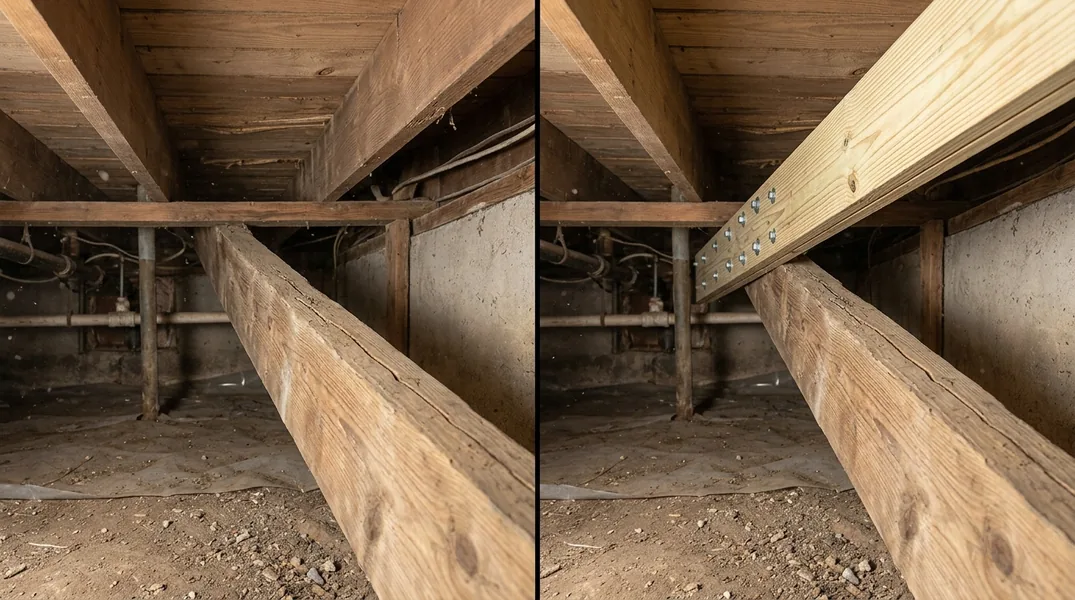
Floor Joist & Subfloor Repair is often the most practical solution for sagging floors, and it comes in several forms depending on the severity of the damage. The most common repair method is called sistering, which involves bolting a new or reinforced joist alongside the damaged one. This process shares the load between the old and new joists, gradually lifting the floor back to its original level while maintaining structural integrity.
Sistering floor joists is a time-tested technique that doesn't require removing the existing joist, which means you won't have to worry about your floor collapsing during repairs. The new sister joist is carefully positioned and secured with construction adhesive and bolts spaced every 16 inches. For homes with significant rot damage, the damaged section may be cut out and replaced entirely, or in severe cases, the entire joist may be removed and a new one installed. The choice depends on how much of the joist is compromised and what the structural engineer recommends.
In some cases, especially where multiple joists are damaged or the sag is severe, a more comprehensive approach involving Beam Replacement & Load-Bearing Wall Removal may be necessary. This is particularly true if the main support beam running under the house has failed. These larger structural repairs require proper temporary support systems and engineering oversight to ensure the house remains safe during the work.
How Much Does Sagging Floor Repair Cost in Omaha?
The pricing for sagging floor repair varies widely depending on the extent of damage, the number of joists affected, and the accessibility of the crawl space or basement. A simple repair involving one or two sistered joists might cost between $1,500 and $3,500, while more extensive work affecting multiple joists or requiring beam replacement can range from $5,000 to $15,000 or more. The key factor is how much of your home's structural system needs attention.
Several variables influence the final cost. First, the severity of wood rot or pest damage determines whether you can simply sister a joist or need to replace it entirely. Replacement is more labor-intensive and expensive. Second, accessibility matters significantly. If your crawl space is tight and difficult to navigate, labor costs increase. Third, if your home has foundation settlement issues that need addressing alongside joist repair, that adds to the total expense. Finally, the type of materials used, whether standard lumber or engineered joists, affects pricing.
Rather than guessing at costs, the best approach is to schedule a professional inspection. Omaha Carpentry offers a thorough assessment of your floor's condition, identifies all problem areas, and provides transparent pricing before any work begins. Call us at (531) 301-8741 to arrange your inspection, or visit our website to request a free estimate.
Signs Your Floors Need Professional Attention
Recognizing the warning signs early can save you thousands in repair costs and prevent serious structural damage. The most obvious sign is visible sagging or unevenness in your floors. Walk through your home and notice whether doors stick, marbles roll across the floor, or you see visible dips in the hardwood. You might also notice creaking or bouncing when you walk, which indicates the joists are flexing more than they should.
Another red flag is water damage or moisture in your basement or crawl space. If you see discoloration on joists, soft spots in the wood, or a musty smell, wood rot is likely present. Pest damage is harder to spot without professional help, but you might notice small holes in joists or a hollow sound when you tap on wood. Finally, if you're planning a major renovation or have recently added significant weight to your home (like a new master bath or built-in shelving), your existing joists may not be adequate, and sagging could develop over time.
The Repair Process: What to Expect
When you hire Omaha Carpentry to repair sagging floors, the process begins with a detailed inspection of your entire structural system. We examine joists, beams, posts, and the foundation to identify all problem areas and determine the best repair strategy. We'll also check for moisture sources, as addressing water intrusion is critical to preventing future rot. Once we understand the full scope of the work, we provide you with a detailed plan and timeline.
During the actual repair, we set up temporary support systems to safely carry the weight of your home while we work on the damaged joists. This temporary bracing is essential for safety and allows us to make repairs without risk. If rot is present, we remove the affected wood and replace it with new, treated lumber. For sistering, we carefully position the new joist, apply construction adhesive, and secure it with bolts. The entire process is methodical and designed to restore your floor to proper level while maintaining structural integrity.
After the repair is complete, we remove the temporary supports and conduct a final inspection to ensure everything meets building codes and our own high standards. We'll discuss any preventive measures you can take, such as improving basement ventilation or addressing foundation drainage, to reduce the risk of future problems. If you've noticed sagging in your home, don't wait. Contact Omaha Carpentry at (531) 301-8741 or request a free estimate today.
Preventing Future Floor Sag: Maintenance Tips for Homeowners
Once your floors have been repaired, protecting them from future damage is essential. The primary enemy of floor joists is moisture. Keep your basement and crawl space as dry as possible by ensuring gutters and downspouts direct water away from your foundation. If you have a crawl space, consider installing a vapor barrier and improving ventilation to reduce humidity. Check your basement regularly for signs of water intrusion and address any leaks immediately.
Regular inspections of your structural system are also important. Walk your crawl space or basement annually and look for signs of rot, pest activity, or new moisture problems. Early detection of these issues allows for smaller, less expensive repairs. If you notice new sagging, creaking, or any changes in your floors, don't ignore them. Contact a professional right away to assess the situation. Finally, be mindful of how much weight you're adding to your home. While older homes are generally sturdy, major renovations or the addition of heavy fixtures should be discussed with a structural professional to ensure your joists can handle the load.
Looking for a professional carpentry contractor in Omaha? Omaha Carpentry responds fast for all your carpentry needs.
Get a Free QuoteOur services: Wood Rot & Dry Rot Repair · Termite Damage Repair · Floor Joist & Subfloor Repair