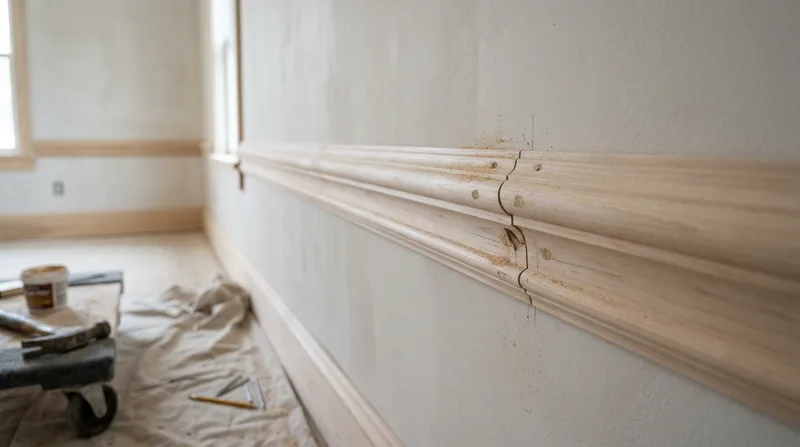




Omaha's historic neighborhoods, from the brick bungalows of Dundee and Benson to the Victorian homes of the Gold Coast and Cathedral districts, depend on crisp trim work to hold their character. Crown molding and baseboard installation in Omaha calls for more than straight cuts and nail guns. The freeze-thaw cycles that crack framing every spring also mean your trim joints expand and contract, demanding coped joints and clean caulk lines that move with the wood. We install crown molding, baseboards, chair rail, and window trim matched to your home's period profile or kept modern and clean, with the detail work that keeps gaps from opening as the seasons turn.
Why Crown Molding and Baseboard Installation Matters in Omaha's Historic Homes
Trim work is not decoration. In Omaha's older homes, crown molding seals the joint where the wall meets the ceiling, baseboards protect the bottom of drywall from kicks and moisture, and proper installation prevents gaps that collect dust and harbor drafts. The continental climate here, with cold snowy winters and hot humid summers, moves wood constantly. A poorly coped joint opens up within a season. A baseboard installed with gaps lets moisture wicking begin at the sill plate. We work from the principle that trim should last as long as the wall it covers.
- We cut and install coped crown molding joints that follow the profile of the existing trim and move with seasonal wood movement.
- We install baseboards with tight joints to the wall and floor, using fastening methods that hold through the freeze-thaw cycles.
- We match existing Victorian profiles in Gold Coast and Cathedral neighborhood restorations, or install crisp modern trim in updated homes.
- We caulk and finish all joints to leave clean lines that hide fasteners and wood movement.
Proper trim installation protects the wall below and keeps your home looking finished through decades of Omaha weather.
Key info: In historic Omaha neighborhoods, original crown molding profiles are often available through specialty mills. We can source and install trim that matches your home's era, or we work with your architect to specify new profiles that respect the original design intent. Check with the Omaha Planning Department if your home is in a designated historic district, as some alterations require approval.
How We Install Crown Molding and Baseboards in Omaha Homes
Our process starts with measuring and profiling. We take time to understand the existing trim, the condition of the walls and ceilings, and any out-of-plumb or out-of-level framing that is common in Omaha's older homes. We then cut and fit each piece on site, coping joints where they meet, and fastening with methods that hold through seasonal movement. We fill gaps with paintable caulk, sand smooth, and leave the trim ready for your painter or stain finish.
- We measure the room and profile the existing trim to identify the correct molding pattern and fastening strategy.
- We cut crown molding at the correct spring angle and cope inside corners so the joint follows the profile without gaps.
- We fasten with finish nails into studs and blocking, or construction adhesive where fastening is not visible, ensuring the trim will not move.
- We fill all gaps and nail holes with paintable caulk, sand smooth, and leave ready for finish.
- We install baseboards tight to the wall and floor, using fastening that accommodates wood movement without popping nails.
The result is trim that stays tight through the seasons and looks finished for decades.
Example: A Dundee bungalow with original 3-inch crown molding and 4-inch baseboards needed new trim in two rooms after water damage from a roof leak was repaired. We sourced matching profiles, installed with coped joints, and finished to blend with the existing trim. The homeowner had it stained to match the original finish. The job took four days and cost $1,800 for materials and labor.
Crown Molding and Baseboard Installation Methods
| Approach | Description | Best for |
|---|---|---|
| Coped Crown Molding | Inside corners are cut to the profile of the adjoining piece so joints follow the molding shape without gaps, even as wood moves with humidity and temperature. | Historic homes, period restoration, any interior where tight joints are visible and matter. |
| Mitered Crown Molding | Inside corners are cut at 45 degrees to meet at a point. Requires precise angle measurement and can open slightly with wood movement. | Painted trim where caulk will hide any minor gaps, or where the room geometry is perfectly square. |
| Butt-Joint Baseboard | Baseboard runs to the corner and the adjacent piece butts into it. Simple and fast, relies on tight fastening and caulk to stay closed. | New construction, updates, rooms where the baseboard will be painted and caulked. |
| Scribed Baseboard | The baseboard profile is traced onto the adjacent piece and cut to fit, allowing it to sit tight against irregular walls or floor lines. | Older Omaha homes with out-of-plumb walls, or where baseboards must fit tight to existing trim or door casings. |
Each method has a purpose. Coped joints are the mark of careful work and are what you see in period homes. Mitered and butt joints are faster and work well in modern spaces. We choose the method that fits your home and your expectations.
Crown Molding and Baseboard Installation Cost in Omaha: What to Expect
Crown molding and baseboard installation in Omaha starts at around $450 for a single small room or area. The cost depends on the linear footage of trim, the complexity of the profile, the number of inside corners that need coping, and the condition of the walls and ceilings. A room with 100 linear feet of crown molding and baseboards, with two inside corners and smooth walls, typically costs between $800 and $1,200. A larger project covering an entire floor or involving custom profiles or scribed joints will cost more.
Factors that move the price include the molding profile (standard profiles are less expensive than custom or period-matched trim), the number of coped joints, access to the work (vaulted ceilings or high walls cost more), and the condition of the walls (out-of-plumb or out-of-level walls require more fitting). Material cost for trim stock varies by species and profile. We recommend getting estimates from two or three carpenters so you understand what is included at each price point.
See our full pricing overview for detailed breakdowns by room size and complexity. Call us at (531) 301-8741 for a free estimate. We respond within 24 hours and can often schedule the work within one to two weeks.
What to Look for When Hiring a Carpentry Contractor Near Omaha
Trim work is visible and permanent. The contractor you hire should have a portfolio of completed jobs, references you can call, and a clear explanation of how they approach coping joints, fastening, and caulking. Ask to see examples of their work in homes similar to yours, whether historic or contemporary. A good contractor will walk you through the job, explain why they are choosing a certain method, and be willing to source special trim if your home calls for it.
We are fully insured and have been in business since 2016. We hold a City of Omaha Building Contractor License and work in Omaha, Papillion, La Vista, Bellevue, Gretna, Ralston, and surrounding areas. We can provide references and photographs of completed work. We give a free estimate with no obligation to book, and we respond within 24 hours. Call (531) 301-8741 or contact us online to schedule a time to walk through your home and talk through the work.
Crown Molding & Baseboard Installation in Omaha: Pricing Guide
| Service | Price | Details |
|---|---|---|
| Single room with standard profile | Starting at $450 | Includes labor and standard trim stock, typically 50 to 80 linear feet of molding and baseboard |
| Full room with coped joints and custom profile | Starting at $800 | Includes sourcing period-matched or custom molding, coped inside corners, and finish-ready caulk and sand |
| Multiple rooms or floor-wide installation | Starting at $2,400 | Covers 200 to 300 linear feet across several rooms, including pattern matching and material sourcing |
| Historic profile matching or specialty sourcing | On estimate | Complex period restorations or hard-to-match profiles require on-site measurement and mill lead time |
| Travel | Included | No separate charge for work within Omaha and surrounding areas, no mileage fee |
| Free estimate | No charge | Response within 24 hours at (531) 301-8741, includes walk-through and written scope and price |
Indicative pricing, the exact cost depends on square footage, finish, and site access. Free personalized estimate within 24h at (531) 301-8741.


