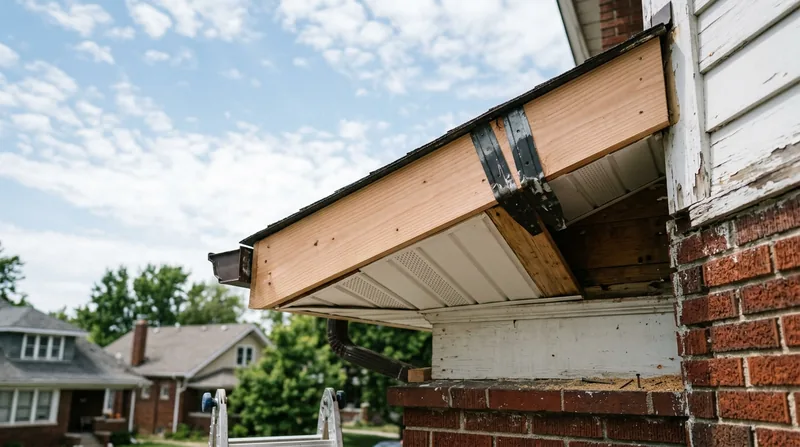




Peeling paint on fascia boards and soft, spongy soffits are the first warning signs that moisture has found its way into your roofline. In Omaha's continental climate, with its freeze-thaw cycles, heavy spring snowmelt, and intense summer humidity, exterior trim takes a beating. Fascia, soffit and exterior trim repair stops that moisture intrusion before rot spreads into the framing, soffits rot away, and pests find an open door into your home. We replace failing fascia, soffits, and trim with primed, rot-resistant material, closing the gaps that let water and insects reach the structure underneath. This work matters most in the early spring after winter damage shows itself, and again in late summer when humidity peaks. Our approach is straightforward: we diagnose what's failed, propose repair where the wood justifies it, and replace only what's necessary. If you've noticed soft spots, paint failure, or daylight gaps around your roofline, we can help you understand what you're looking at and what it will cost to fix.
Why Fascia, Soffit and Exterior Trim Fail in Omaha's Climate
Omaha's weather cycle is hard on wood. Winter brings subfreezing temperatures and heavy snow loads that stress the joints where fascia and soffit connect to the structure. Spring thaw sends water running down every gutter seam and under every gap in trim. Summer humidity keeps the wood damp for weeks at a time, especially on north-facing and shaded exposures. Older homes in Dundee, Benson, and the Gold Coast neighborhoods often carry original wood fascia and trim from the 1920s and 1930s, painted many times over, with those paint layers now cracked and peeling. Newer vinyl-sided homes in West Omaha and Ralston can hide soffit rot behind the vinyl until the damage is deep. The real enemy is sustained moisture trapped behind paint, between trim boards, or under loose gutters.
- Freeze-thaw cycles crack paint and open seams where water enters the wood.
- Spring snowmelt and summer thunderstorms drive water into every gap and joint.
- Shade and humidity from large cottonwood and elm trees keep north-facing trim perpetually damp.
- Peeling or failed caulk around trim joints lets water migrate into the structure behind the fascia.
- Poorly maintained gutters overflow and direct water directly onto fascia and soffit boards.
When you catch these failures early and replace the damaged boards with primed, rot-resistant material, you stop the problem before it reaches the framing or rim joist.
Key info: In Omaha's Dundee and Cathedral neighborhoods, many historic bungalows still carry original wood fascia and soffits painted so many times that water can no longer penetrate the paint, forcing it sideways into the trim joints. We replace these with primed boards cut to the original profile, preserving the character of the home while stopping the rot.
For more on how moisture and rot interact in Omaha homes, see our guide to wood rot and dry rot repair.
How We Replace Fascia, Soffit and Exterior Trim in Omaha
Our process starts with a clear-eyed assessment of what's actually failed. We climb up, probe the boards with a screwdriver or awl to test for soft spots, check the caulk and paint seals, and look for gaps where water is entering. We take photographs and explain what we see. If only the fascia is compromised but the soffit and framing are sound, we replace the fascia alone. If the soffit is rotted but the fascia is still solid, we address the soffit. We use primed lumber or composite trim materials that resist rot and moisture, and we install new flashing and caulk to seal every joint. The work is fast by comparison to structural repairs, usually taking one to three days depending on the linear footage involved and the complexity of the roofline.
- We inspect all fascia, soffit, and trim boards for soft spots, paint failure, and water entry points.
- We remove only the boards that are compromised, preserving original trim where it is sound.
- We install new flashing and prime all cut ends before final caulking and painting.
- We seal every joint and gap with exterior-grade caulk to prevent future moisture intrusion.
- We coordinate with your painter or provide finish recommendations for long-term protection.
The goal is to stop water at the exterior before it ever reaches the structure underneath.
Example: A homeowner in Papillion called us about soft fascia boards on the north side of their mid-century brick ranch. We found that the original wood fascia was rotted where it met the gutter, and the soffit behind it was beginning to fail. We replaced 40 linear feet of fascia with primed pine, installed new aluminum soffit vents, sealed all joints with caulk, and primed everything before the painter came back for final coat. Total time: two days. Cost was reasonable because we replaced only what was necessary.
For related finish carpentry and trim work, see our finish and trim carpentry service page.
Repair Methods and Materials
| Approach | Description | Best for |
|---|---|---|
| Selective board replacement | Remove and replace only the rotted fascia, soffit, or trim boards with primed lumber or composite material. | Localized rot in one or two boards, sound structure underneath, preserving original profile. |
| Full soffit and fascia system replacement | Remove and replace all fascia, soffit, vents, and flashing on one or more sides of the structure. | Widespread rot, multiple failed boards, compromised ventilation, or new construction aesthetic. |
| Caulk and seal remediation | Remove old caulk, prep joints, install new exterior-grade caulk, and prime or paint. | Paint failure and gaps around sound boards, preventing water entry before rot starts. |
| Flashing installation or repair | Install or replace metal flashing where trim meets the roof or wall to direct water away from wood. | Preventing future rot, protecting new trim boards, addressing chronic water intrusion points. |
| Composite or engineered trim | Replace wood fascia or soffit with primed composite material that resists moisture and rot. | High-moisture exposures, north-facing trim, homes where maintenance is infrequent or difficult. |
Each approach is tailored to the scope of the damage, the structural condition underneath, and your long-term maintenance expectations.
Fascia, Soffit and Exterior Trim Repair Cost in Omaha: What to Expect
Fascia, soffit, and exterior trim repair in Omaha typically starts at $700 for a small localized repair, such as replacing a single rotted fascia board or resealing trim joints on one section of the house. The actual cost depends on several concrete factors. Linear footage is the primary driver: a 20-foot run of fascia replacement costs less than an 80-foot run around a larger home. The material you choose matters: primed pine is less expensive than composite trim, which resists rot better over time. Access affects labor time; if the soffit is low and open, the work is faster than if we need scaffolding to reach a high, complex roofline. The condition of the underlying structure also matters. If the rim joist or framing behind the fascia is sound, we replace only the trim. If the wood underneath has begun to fail, the scope grows and so does the cost. For a comprehensive estimate tailored to your home, call us at (531) 301-8741 or visit our pricing overview page.
Most homeowners in Omaha, Papillion, Bellevue, and Ralston find that replacing failed fascia and soffit early, before the damage spreads to the framing, saves money in the long run. Getting two or three estimates is smart practice, and each should specify exactly which boards are being replaced and what material is being used.
Hiring a Carpentry Contractor Near Me: What to Look for in Omaha
When you're looking for a carpenter to handle fascia, soffit, and exterior trim repair near Omaha, start by asking whether the contractor is fully insured and carries a current City of Omaha Building Contractor License. Request references from recent jobs and call them. Ask about the specific materials being used: will the new fascia be primed lumber, composite, or something else? Will flashing and caulk be included? Get at least two or three estimates in writing, and compare what's actually included in each price. If your home is in a historic district such as the Gold Coast or Cathedral neighborhoods, check whether your local neighborhood association or the Omaha Planning Department has guidelines for exterior trim replacement, and make sure your contractor is aware of them. For newer homes in HOA communities like those in West Omaha or Gretna, verify that your HOA has any approval process for exterior work. We are fully insured and have been in business since 2016, serving Omaha and the surrounding area. If you'd like a free, no-obligation estimate, contact us here or call (531) 301-8741.
A good carpenter will take time to explain what's failed, show you the damage, and be honest about whether repair or replacement is the right call. Avoid anyone who tries to sell you a full replacement when only one board is actually compromised.
Fascia, Soffit & Exterior Trim Repair in Omaha: Pricing Guide
| Service | Price | Details |
|---|---|---|
| Single fascia or soffit board replacement | Starting at $700 | Includes labor, primed lumber, fasteners, caulk, and prime coat for one compromised board. |
| Partial fascia and soffit repair (one side of house) | Starting at $1,400 | Replace multiple boards on one elevation, new flashing, caulk sealing, and prep for paint. |
| Full fascia and soffit system replacement | Starting at $3,500 | All fascia, soffit, vents, and flashing on entire home perimeter, primed and sealed. |
| Composite or engineered trim upgrade | Add 25 to 40 percent | Primed composite material costs more than wood but resists moisture and rot significantly longer. |
| Emergency or same-day work | Call for quote | Urgent fascia or soffit failure requiring immediate attention may carry expedited scheduling fee. |
| Travel and estimate | Free estimate, included travel | No charge for in-home assessment or travel throughout Omaha and surrounding service areas. |
Indicative pricing, the exact cost depends on square footage, finish, and site access. Free personalized estimate within 24h at (531) 301-8741.


