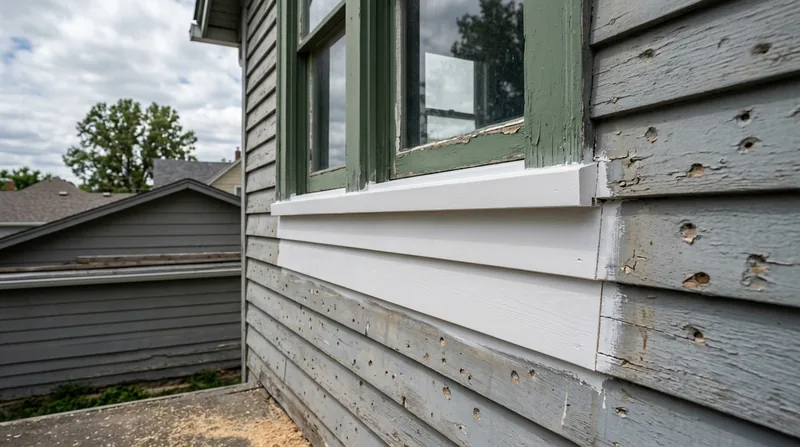




Omaha's continental climate and freeze-thaw cycles create ideal conditions for wood decay. Cold snowy winters followed by rapid spring thaws push moisture deep into framing, siding, and trim, while the moderate termite pressure of Eastern Nebraska compounds the damage. Historic brick bungalows in Dundee and Benson, Victorian homes in the Gold Coast, mid-century ranch homes across Millard, and restored warehouse lofts in the Old Market all face the same threat: structural wood that softens, loses strength, and eventually fails if left untreated. Wood Rot and Dry Rot Repair in Omaha is not cosmetic work. It is structural preservation. We cut out decayed wood, assess what can be saved, and rebuild with sound framing or rot-resistant lumber, restoring the load-bearing capacity and longevity of your home. This page explains what rot looks like, how we repair it, and what you should expect to invest.
Why Wood Rot and Dry Rot Matter in Omaha's Freeze-Thaw Climate
Omaha sits on the loess bluffs of the Great Plains under a climate that swings hard between extremes. Winter snow and ice melt into spring thaws that push water into walls, rim joists, sill plates, and fascia. Summer humidity lingers in poorly ventilated crawlspaces and attics. Wood that stays damp loses its structural integrity. Decay begins invisibly, inside the wood fibers, before soft spots appear on the surface. Once rot establishes itself in a floor joist, subfloor, or load-bearing stud, it spreads horizontally and vertically, weakening the frame and creating settlement, sagging floors, and soft spots underfoot.
- Freeze-thaw cycles crack paint seals and open gaps where water enters framing and trim.
- Inadequate drainage or grading around the foundation allows moisture to wick into rim joists and sill plates from below.
- Missing or damaged fascia and soffit allow water to run behind clapboard and into wall cavities.
- Flat-roofed porches and decks pond water and transfer it into the ledger board and rim joist of the house.
- Crawlspace moisture and poor ventilation create the damp, still-air environment where rot thrives.
Catching rot early and cutting it out before it reaches a load-bearing beam or joist saves money and prevents structural failure.
Key info: A soft spot in a rim joist or floor joist discovered during a home inspection in Ralston or Papillion is not an emergency, but it is not optional. The decay will not stop on its own. Water will continue to move through the wood, and rot will spread. The longer you wait, the more wood you lose and the more expensive the repair becomes.
For more on related structural issues, see our page on Floor Joist and Subfloor Repair.
How We Repair Wood Rot and Dry Rot in Omaha
Our process is methodical and transparent. We start by identifying the full extent of the decay, determine what wood can be saved and what must be replaced, and then execute a permanent repair. We do not patch cosmetically or apply surface treatments. We remove the compromised wood, treat the surrounding sound framing with a borate preservative to halt any incipient decay, and rebuild with pressure-treated lumber or naturally rot-resistant species rated for the exposure. If the damage touches a load-bearing element such as a beam or a load-bearing wall, we may recommend that a structural engineer size the replacement member and verify the repair meets code, and we obtain any required permits from the City of Omaha Building Department before we begin.
- We open the wall or framing to expose the full extent of rot, using hand tools and careful cutting to minimize damage to sound wood and to adjacent finishes.
- We remove all decayed wood back to solid grain, chiseling and cutting until the remaining wood is firm and dry.
- We apply a borate wood preservative to the freshly cut surfaces and to the surrounding sound wood to arrest any dormant decay and protect against future infestation.
- We replace the removed wood with pressure-treated lumber, cedar, or redwood, selected for the exposure and the structural demand of the member.
- We restore casing, trim, and finish carpentry to match the original profile and paint or stain to match the existing work.
- We address the underlying moisture source, such as improving drainage, resealing seams, or installing or repairing fascia and soffit.
The result is a repair that restores the wood to its original strength and durability, not a temporary patch.
Example: A homeowner in the Dundee neighborhood discovered soft spots in the rim joist where the porch ledger connected to the house. Water was wicking up from the porch deck and saturating the rim joist and the band board above it. We removed 6 feet of compromised rim joist, treated the ledger and the adjacent rim joist with borate preservative, and replaced the removed section with pressure-treated lumber sistered to the existing joist for added strength. We also removed the old porch deck, corrected the drainage slope, and installed new fascia and soffit to shed water away from the house. The repair cost $1,800 and took three days.
For related structural work, visit our page on Framing and Structural Carpentry.
Methods and Approaches to Wood Rot and Dry Rot Repair
| Approach | Description | Best for |
|---|---|---|
| Localized removal and replacement | Cut out the decayed section, treat surrounding wood with borate preservative, and replace with pressure-treated lumber or naturally rot-resistant species, matched to the original profile and finish. | Rot confined to a single joist, rim board, or section of trim. Most common repair, least disruptive. |
| Sistering and reinforcement | Where the rot has weakened but not fully compromised a load-bearing member, bolt a new pressure-treated joist or beam alongside the existing wood to share the load and restore structural capacity. | Floor joists, rim joists, or beams where partial decay is detected early. Preserves the original wood and adds redundancy. |
| Full member replacement | Remove the entire decayed member and replace it with new pressure-treated or naturally rot-resistant lumber of the same or greater dimension, secured with bolts and bearing blocks. | Extensive decay affecting the entire depth or length of a joist, beam, or load-bearing stud. Often requires temporary support and may require a structural engineer and permit. |
| Moisture remediation and preventive sealing | Repair or install fascia, soffit, and gutters, improve drainage and grading, install or upgrade crawlspace ventilation, and seal gaps and seams to prevent water intrusion into framing. | Any rot repair, to prevent recurrence. Critical in Omaha's freeze-thaw climate where water ingress is the primary driver of decay. |
Wood Rot and Dry Rot Repair Cost in Omaha: What to Expect
Cost for wood rot and dry rot repair in Omaha ranges widely depending on the location and extent of the decay, the accessibility of the affected wood, and whether the repair involves a load-bearing member that requires a structural engineer and a permit. A small, localized repair to a rim joist or trim board starts at $650 and covers removal, treatment, and replacement of up to 4 linear feet of wood plus finish carpentry. Larger jobs, such as replacing an entire floor joist or a section of rim board in a multi-family building or a complex geometry, typically run $1,200 to $3,500. If the decay reaches a load-bearing beam, a structural engineer must size the replacement and the City of Omaha Building Department must issue a permit before work begins, which adds time and cost. Moisture remediation, such as reroofing a porch, installing new fascia and soffit, or improving crawlspace drainage, is priced separately.
The best way to know what your repair will cost is to have us inspect the damage. We provide a free estimate within 24 hours, with no obligation. Call (531) 301-8741 or request an estimate online. For a detailed pricing overview covering all our services, visit our pricing page.
Wood Rot and Dry Rot Repair Near Me: What to Look for When Hiring a Carpenter in Omaha
Finding the right carpenter for wood rot repair is about more than price. You need someone who understands the local climate and building types, who will cut out all the decay and address the moisture source, and who will stand behind the work with a clear warranty. Ask potential contractors how they identify the extent of rot, whether they recommend a structural engineer for load-bearing members, what warranty they offer on the repair, and whether they help you document damage for an insurance claim. Request references from recent jobs in your neighborhood. Omaha Carpentry has been licensed as a City of Omaha Building Contractor since 2016 and is fully insured. We provide a free estimate and explain the repair in plain language before we start.
If the decay is near a boundary line or in a protected or historic district, check with your homeowners association or the City of Omaha Planning Department to understand any restrictions on materials or methods. Some neighborhoods in the Gold Coast and Cathedral areas have design guidelines that govern how exterior repairs must look. A contractor who knows the local rules saves you from costly do-overs.
For a free estimate or to discuss your wood rot concern, contact us here or call (531) 301-8741. We serve Omaha, Papillion, La Vista, Bellevue, Ralston, and surrounding areas.
Wood Rot & Dry Rot Repair in Omaha: Pricing Guide
| Service | Price | Details |
|---|---|---|
| Small localized repair | Starting at $650 | Removal, treatment, and replacement of up to 4 linear feet of rim joist, sill plate, or trim board, plus finish carpentry |
| Medium repair (single joist or beam section) | Starting at $1,200 | Removal and replacement of 5 to 10 linear feet of floor joist, rim joist, or beam, including borate treatment and sistering where needed |
| Large structural repair or full member replacement | On estimate | Extensive decay, load-bearing members, or repairs requiring temporary support, structural engineer, and building permit require on-site inspection for accurate pricing |
| Moisture remediation and prevention | Starting at $800 | Fascia, soffit, gutter repair or installation, drainage correction, crawlspace ventilation, and sealing to prevent future water intrusion |
| Travel and estimate | Free | No charge for travel within Omaha and surrounding service areas, and no obligation on free estimate, response within 24 hours |
Indicative pricing, the exact cost depends on square footage, finish, and site access. Free personalized estimate within 24h at (531) 301-8741.


