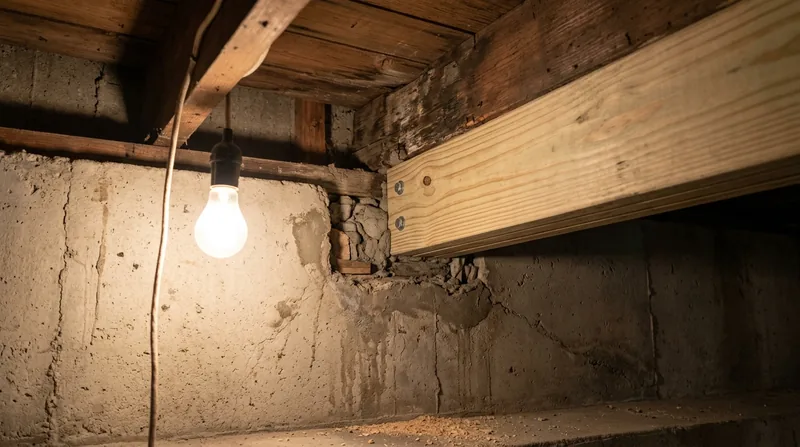




Omaha's older residential neighborhoods from Dundee to the Gold Coast, along with mid-century brick ranchlands across Millard and Ralston, sit on terrain shaped by freeze-thaw cycles and seasonal moisture swings that take a toll on wood framing. When floor joist and subfloor repair becomes necessary, the culprit is usually a combination of age, ground-level moisture, and the continental Great Plains climate. Sagging, bouncy, or soft floors in bungalows, Victorians, and post-war homes often trace to damaged joists or subfloor sections compromised by rot or structural fatigue. We sister or replace compromised joists and rebuild subfloor sections, leveling floors before finishes go back down. The work is structural, and getting it right matters for safety, resale value, and the long-term integrity of your home. Our approach is to explain what we find, repair what can be repaired, and replace what must be replaced, without unnecessary drama or overbuilding. Call us at (531) 301-8741 for a free estimate, or learn more about wood rot and dry rot repair if moisture and decay are the driving pathology.
Why Floor Joist and Subfloor Repair Matters in Omaha's Older Homes
Omaha's building stock reflects decades of settlement patterns and climate exposure. The bungalows and Victorians in historic neighborhoods were built on shallow foundations with rim joists and sill plates that sit close to grade, making them vulnerable to moisture wicking and wood decay over time. The freeze-thaw cycles that crack driveways and heave foundations every spring also stress wood framing, opening checks and joints where water infiltrates. Mid-century brick ranches and restored warehouse lofts in the Old Market add their own challenges: older joists were often smaller by modern standards, and subfloor fastening has loosened with decades of movement. A soft or bouncy floor is not simply a comfort issue; it signals that the structural skeleton beneath your finish flooring is no longer carrying loads as designed.
- Inspect joists and subfloor for soft spots, spongy wood, or visible rot, especially in basements and crawlspaces where moisture accumulates.
- Check for signs of past water intrusion, including staining, mold growth, or a musty smell in below-grade spaces.
- Test floor deflection by walking across suspected areas and noting whether the floor feels springy or dips under your weight.
- Measure joist spacing and depth to understand whether the original framing was undersized for modern loads or has been compromised by decay.
Early detection saves money and prevents further structural compromise. A joist that is 40 percent compromised by rot may be repairable via sistering; one that is 70 percent gone must be replaced.
Key info: In Omaha bungalows and Gold Coast Victorians, the rim joist and sill plate connection to the foundation wall is the most common failure point. Moisture wicks up from concrete, wood sits against masonry, and rot begins at the joist pocket. We remove the compromised section, install flashing, sister in new framing, and seal the connection to stop the cycle.
For more on the wood decay pathologies that affect Omaha homes, see our termite damage repair page, which covers structural wood loss from multiple causes.
How We Repair Floor Joists and Subfloor in Omaha: Our Process
Floor joist and subfloor repair begins with a thorough inspection. We access the framing from below whenever possible, probe suspect wood with a sharp tool to test density, and document the extent of damage. Once we understand what is salvageable and what must be replaced, we propose a repair strategy that balances cost, timeline, and structural performance. For smaller jobs, sistering a new joist alongside a compromised one is fast and cost-effective. For larger failures or multiple joists, we remove the damaged wood, install new pressure-treated or dimensional lumber, and rebuild the subfloor with proper fastening and flashing to prevent recurrence.
- We measure and assess the full extent of damage before proposing a repair method, avoiding unnecessary replacement.
- We install proper flashing and moisture barriers at the foundation connection to stop water from entering the joist pocket again.
- We sister or replace joists using dimensional lumber sized to match the original framing and carry the floor loads safely.
- We rebuild subfloor sections with tongue-and-groove or standard sheathing, fastened to code and leveled before finish flooring returns.
- We test floor deflection after repair to confirm the structure is solid and meets modern performance standards.
The entire job is coordinated to minimize disruption. If you have finished flooring or basement walls in place, we work around them and patch or restore them as the scope allows.
Example: A homeowner in Ralston noticed a soft spot in the upstairs hallway. We found two adjacent joists with rot at the rim connection, about 18 inches of each joist compromised. We sistered two new pressure-treated joists alongside the damaged ones, installed flashing at the foundation, and rebuilt the subfloor. The work took three days, cost $2,400, and eliminated the bounce. The original joists remain in place, adding redundancy, and the new connection is sealed against future moisture.
Repair Methods and When to Use Each
| Approach | Description | Best for |
|---|---|---|
| Sistering | Fastening a new joist alongside a compromised one with bolts or nails, leaving the original in place for redundancy. | Joists that are 30 to 50 percent compromised and can be reinforced without full removal. |
| Full joist replacement | Removing the damaged joist entirely and installing new pressure-treated or dimensional lumber in its place. | Joists that are more than 50 percent compromised or have failed at the bearing point. |
| Subfloor patching | Removing and replacing small sections of subfloor plywood or boards where rot or water damage is localized. | Subfloor damage confined to a few square feet, often paired with joist repair above. |
| Rim joist and sill sealing | Installing flashing, sealant, and moisture barriers at the foundation-to-framing connection to stop water infiltration. | All joist repairs, especially in older Omaha homes where rim joists sit directly on masonry or concrete. |
We always prioritize repair over replacement when the wood structure can be saved. Sistering a joist costs less, maintains the original framing, and adds structural redundancy. However, if decay has compromised more than half the joist depth or length, replacement is the only honest answer.
Floor Joist and Subfloor Repair Cost in Omaha: What to Expect
Floor joist and subfloor repair in Omaha starts at around $1,800 for a straightforward single-joist repair with subfloor patching in an accessible crawlspace or basement. The final cost depends on several factors: the number of joists involved, the percentage of each joist that is compromised, whether the joist must be replaced or sistered, the condition and extent of subfloor damage, and the difficulty of access. A job in a finished basement with drywall and utilities overhead costs more than one in an open crawlspace. Multiple joists or widespread subfloor failure push the estimate higher, sometimes into the $4,000 to $6,000 range or beyond.
We recommend getting two or three estimates from local carpenters so you can compare approach and price. Some contractors will recommend full joist replacement when sistering would work; others may underbid and cut corners on flashing or fastening. Our estimates are transparent: we show you what we find, explain the repair method, and give you a firm price before work begins.
For detailed pricing guidance and to see how job size and complexity affect the final bill, visit our pricing page. If you are ready to move forward, call (531) 301-8741 or contact us online for a free, no-obligation estimate.
Hiring a Carpentry Contractor Near Omaha: What to Look For
Choosing the right carpenter for floor joist and subfloor repair is important because the work is structural and affects the safety and value of your home. When you are evaluating contractors near Omaha, ask whether they are fully insured and can provide proof of coverage. Request references from recent jobs, especially repairs in older homes similar to yours. Ask how they approach the diagnosis: do they probe the wood, measure deflection, and explain what they find, or do they jump to a quote without detail? Understand whether they will sister or replace, and why they recommend one approach over the other. For jobs that involve altering the floor structure significantly, check whether the Omaha Building Department requires a permit and what drawings or inspections are needed. Some HOA communities in West Omaha or Elkhorn may also have approval requirements; confirm before you begin.
- Verify that the contractor is fully insured and holds a current City of Omaha Building Contractor License or equivalent credentials for your area.
- Ask for at least three references from homeowners in Omaha, Papillion, La Vista, or Bellevue who have had joist or subfloor work done in the past two years.
- Request a written estimate that itemizes the repair method, materials, labor, and any flashing or moisture barriers that will be installed.
- Confirm whether the contractor will obtain any required permits or coordinate with the building department on your behalf.
- Discuss the timeline: how long the job will take, whether it requires multiple visits, and what disruption to expect in your home.
A contractor who takes time to explain the pathology, shows you the damage, and answers your questions is more likely to deliver quality work and a result you trust. Get multiple estimates and compare not just price but approach and professionalism. Contact us today for a free estimate and a straightforward conversation about your floor.
Floor Joist & Subfloor Repair in Omaha: Pricing Guide
| Service | Price | Details |
|---|---|---|
| Single joist repair with subfloor patching | Starting at $1,800 | Includes sistering or partial replacement of one joist, subfloor patching, flashing, and leveling in accessible crawlspace |
| Multiple joists or full joist replacement | Starting at $3,200 | Two or more joists sistered or replaced, extended subfloor work, and moisture barriers at foundation connection |
| Rim joist and sill plate repair | Starting at $2,400 | Removal and replacement of compromised rim joist section, new flashing, sealant, and moisture barrier installation |
| Complex or multi-area job | On estimate | Large-scale subfloor failure, difficult access, finished basement removal and restoration, or multiple structural issues require site assessment |
| Estimate and consultation | Free | Response within 24 hours, no obligation, full diagnosis and written estimate provided before any work begins |
Indicative pricing, the exact cost depends on square footage, finish, and site access. Free personalized estimate within 24h at (531) 301-8741.


