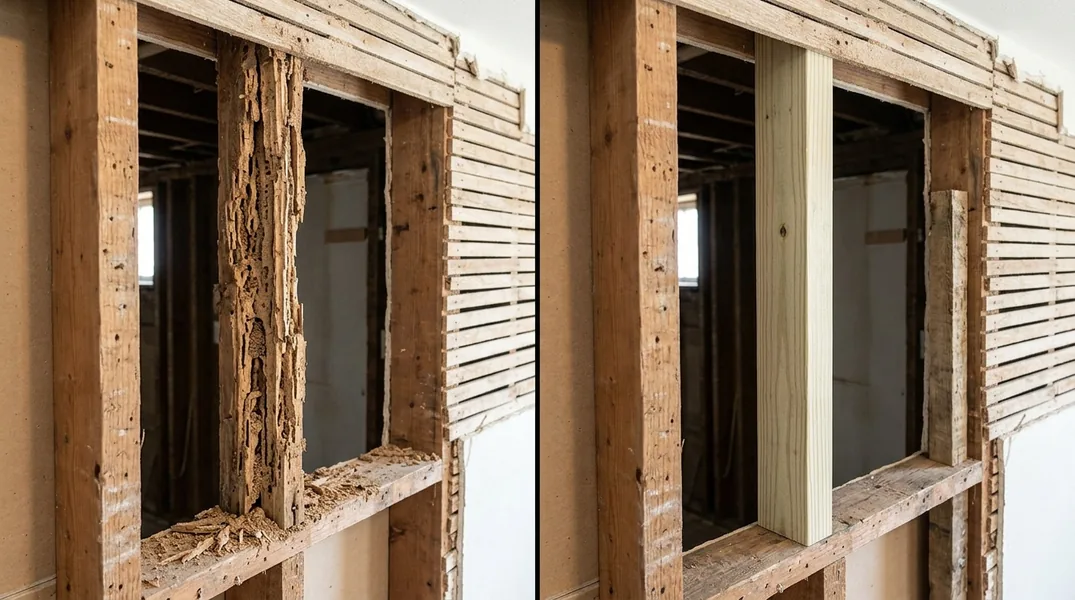
Dry Rot vs Termite Damage: The Critical Differences
When you discover damage to the wooden structures in your Omaha home, the first question is usually: what caused this? Is it dry rot, termite damage, or something else entirely? While both can be devastating to your home's structural integrity, understanding the differences between dry rot and termite damage is essential for determining the right course of action and protecting your investment.
The confusion is understandable. Both dry rot and termite damage compromise wood, weaken structural components, and can cost thousands of dollars to repair if left unchecked. However, they have completely different causes, progression patterns, and treatment approaches. Dry rot is a fungal decay process that spreads through moisture, while termites are wood-eating insects that tunnel through wood for food and shelter. Identifying which problem you're facing is the first step toward effective remediation. At Omaha Carpentry, we've helped countless homeowners across Omaha distinguish between these two threats and take appropriate action.
What Does Wood Rot Look Like? Understanding Dry Rot Characteristics
Dry rot is a misnomer that confuses many homeowners. Despite its name, dry rot actually requires moisture to develop. It's caused by a wood-destroying fungus that thrives in damp conditions and slowly decomposes the cellulose in wood. Understanding what does wood rot look like is crucial for early detection. Dry rot typically appears as a dark brown or reddish discoloration on the wood surface, often accompanied by a distinctive cubic cracking pattern. The wood becomes brittle and crumbly, and when you press on it with a tool or your finger, it may crumble like powder or break into cube-shaped pieces.
The progression of dry rot follows a predictable pattern. It usually starts in areas where moisture accumulates, such as around windows, doors, basement walls, or areas with poor ventilation. You might notice a musty odor, which is the fungal growth at work. Unlike termite damage, which creates visible tunnels and galleries, dry rot spreads through the wood in a more diffuse manner. The affected wood loses its structural strength, becoming spongy and weak. If you suspect dry rot in your home, professional Wood Rot & Dry Rot Repair is often necessary to remove the affected wood and address the underlying moisture problem that allowed it to develop in the first place.
Signs of Termite Damage in Wood: What to Look For
Termite damage presents a distinctly different appearance than dry rot. Termites are social insects that work in colonies, and they create organized tunnel systems as they consume wood from the inside out. The signs of termite damage in wood include hollow-sounding wood when tapped, visible mud tubes (pencil-thin tunnels made of soil and saliva) running along foundation walls or wooden beams, and small holes or exit points where termites emerge. Unlike the crumbly, cube-patterned breakdown of dry rot, termite damage often leaves the wood's surface relatively intact while hollowing out the interior.
One of the most telling signs of termite damage is the presence of discarded wings near entry points. Termites shed their wings after establishing a new colony, and finding these wings is a red flag that active termites are present in your home. You might also notice small piles of wood-colored droppings, called frass, beneath infested wood. Termite damage tends to follow the grain of the wood and creates galleries that look like interconnected tunnels. If you catch termite damage early, professional Termite Damage Repair can prevent catastrophic structural failure. However, termite colonies can remain hidden for years, causing extensive damage before homeowners realize there's a problem.
Moisture, Insects, and Your Home's Foundation: How Each Problem Starts
Understanding how dry rot and termite damage begin is key to prevention. Dry rot is fundamentally a moisture problem. It develops when wood is exposed to sustained dampness, typically in areas where water intrusion occurs or ventilation is poor. Basements, crawl spaces, bathrooms, and areas around foundation cracks are common breeding grounds for dry rot. The fungus spores are naturally present in the environment, but they only activate and spread when moisture levels exceed 20 percent in the wood. This is why addressing water leaks, improving drainage, and maintaining proper ventilation are critical components of dry rot prevention.
Termites, by contrast, are attracted to wood but don't necessarily require the high moisture levels that dry rot needs. However, termites do prefer moist wood because it's easier to consume. They gain access to homes through soil contact with wood, cracks in foundations, or gaps in the structure. Termites work year-round in warmer climates and seasonally in colder regions like Nebraska. A single termite colony can contain hundreds of thousands of individual termites, all working to tunnel through your home's wooden structures. This is why termite damage can escalate rapidly once an infestation takes hold. If you're dealing with either problem, the team at Omaha Carpentry can assess the extent of the damage and recommend the best repair strategy.
When to Call a Professional: Wood Rot & Dry Rot Repair Near Me
While minor surface damage might seem manageable, both dry rot and termite damage can compromise your home's structural integrity in ways that aren't immediately visible. Affected wood in critical areas like Floor Joist & Subfloor Repair or Beam Replacement & Load-Bearing Wall Removal situations requires professional evaluation and repair. Attempting a DIY fix on structural elements can be dangerous and may not adequately address the root cause of the problem. A professional inspection can determine the extent of damage, identify whether the problem is still active, and develop a comprehensive repair plan.
If you suspect dry rot or termite damage in your home, don't delay. The longer these problems persist, the more expensive they become. A professional carpenter can remove damaged wood, treat the affected area, and replace compromised structural elements. They can also address the underlying cause, whether that's moisture control for dry rot or termite prevention measures for insect damage. Contact Omaha Carpentry at (531) 301-8741 to schedule a free estimate and get expert guidance on your specific situation.
Prevention: Protecting Your Omaha Home from Both Threats
The best approach to dry rot and termite damage is prevention. For dry rot, this means controlling moisture in your home. Ensure gutters and downspouts direct water away from your foundation, repair roof leaks promptly, maintain proper grading around your home, and improve ventilation in basements and crawl spaces. Check for water intrusion around windows and doors, and consider using a dehumidifier in areas prone to dampness. Regular inspections of vulnerable areas can catch early signs of moisture problems before they develop into full-blown dry rot.
Termite prevention requires a different approach. Have your foundation inspected regularly for signs of termite activity or mud tubes. Maintain a clear barrier between soil and wood by ensuring wood siding, decks, and structural elements don't come into direct contact with soil. Remove dead wood, stumps, and debris from your yard, as these attract termites. Consider professional termite inspections annually, especially if you live in an area with a history of termite problems. Many homeowners find that professional termite prevention treatments provide valuable peace of mind. By staying vigilant and addressing problems early, you can protect your investment and ensure your home remains structurally sound for years to come.
Looking for a professional carpentry contractor in Omaha? Omaha Carpentry responds fast for all your carpentry needs.
Get a Free QuoteOur services: Wood Rot & Dry Rot Repair · Termite Damage Repair · Floor Joist & Subfloor Repair